Rural & regional

Distance shouldn't decide who gets specialist input

A country GP manages the same complex patients as a city one, with a fraction of the specialist and allied health workforce within reach. We do the finding, and bring the team to the patient instead.

Why it matters

The further out you live, the thinner the team gets

It isn't only that there are fewer doctors. It's that the multidisciplinary team a complex patient needs is scattered across hundreds of kilometres, or simply isn't there.

7 years

lower life expectancy in remote areas than in major cities.

264 vs 437

full-time-equivalent doctors per 100,000 people in very remote areas, against major cities.

1.7×

the burden of disease carried in very remote areas compared with major cities.

What we do

We go and find the clinicians you can't

Most platforms hand a practice an empty address book. For rural and regional practices we do the recruiting ourselves — the endocrinologist, the psychologist, the dietitian, the physiotherapist your patient needs and your town doesn't have — and we bring them into the conference by video.

The GP still convenes, still decides and still holds the relationship with the patient. Nobody drives four hours for a conversation, and nobody waits eight months for an outpatient appointment to have it.

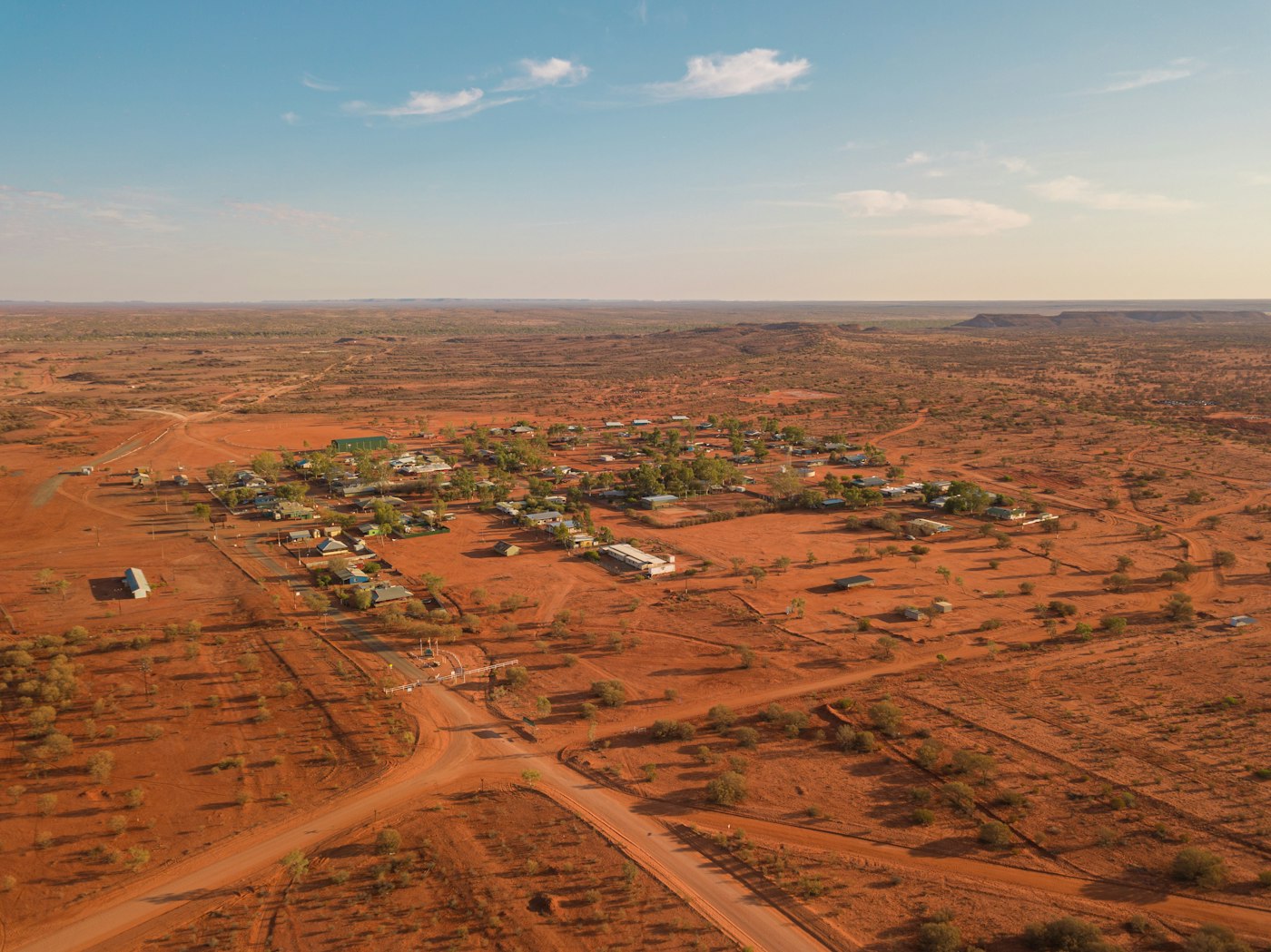
Aerial view of a small town in the Australian outback

How it runs

The same conference a city practice runs

You pick the patient

Any patient whose care spans more than one clinician. Chronic disease, mental health, post-surgical recovery, complex paediatrics.

We build the team

We recruit from anywhere in Australia, then handle the invitations, consent and scheduling so your reception staff don't.

Everyone claims

Thirty to forty minutes by video. You claim the GP case conferencing item, the specialists and allied health claim theirs, and the patient pays nothing.

Research

We are building the rural evidence, not waiting for it

Case conferencing is an established model — the trials, reviews and cost analyses behind it are decades deep. What has barely been studied is what it does at distance: whether a country practice can assemble the team by video, what changes for the patient when it can, and what it costs. That is the question our work puts to the field, with rural clinicians and rural academic partners.

Compass Conference 2026

Mind the gap: Making shared care work between rural GPs, specialists, and allied health clinicians

Shared care across distance, broadened from mental health to chronic disease for the Territory's primary care audience — accepted for Compass NT 2026 under the theme 'Changing Territory: Sustainable, Smart and Responsive Primary Care'.

Abstract accepted14–15 August 2026 · Darwin Convention Centre, Darwin NT

Rural Medicine Australia 2026

Closing the distance: A digital approach to rural multidisciplinary care

A 30-minute paper in the RMA26 academic program on what changes for a rural practice when the specialist and allied health team can be brought to the patient by video.

30-minute academic presentation23 October 2026 · Adelaide Convention Centre, Tarndanya (Adelaide)

Rural Mental Health Conference 2026

Mind the gap: Making shared care work between rural GPs and mental health clinicians

Shared mental health care across rural distance: what a digital coordination platform changed for communication, treatment plans, role clarity and clinician burden across sites in Western Australia.

Presentation4–6 November 2026 · RACV Royal Pines Resort, Gold Coast QLD
Our commitment

We recruit for your town, not just from our network

If the clinician your patient needs isn't on the platform yet, that is our job to fix — not a reason to tell a rural practice no.

Get in touch

Tell us what your patients can't get locally

Send us the disciplines your town is missing and our team will start recruiting. No cost to the practice.

References

  1. King MA, Roberts MS. Multidisciplinary case conference reviews: improving outcomes for nursing home residents, carers and health professionals. Pharmacy World & Science. 2001;23(2):41–5. Available from: https://doi.org/10.1023/a:1011215008000
  2. Agar M, Luckett T, Luscombe G, Phillips J, Beattie E, Pond D, et al. Effects of facilitated family case conferencing for advanced dementia: a cluster randomised clinical trial. PLoS ONE. 2017;12(8):e0181020. Available from: https://doi.org/10.1371/journal.pone.0181020
  3. Shelby-James T, Currow D, Phillips P, Williams H, Abernethy A. Promoting patient centred palliative care through case conferencing. Australian Family Physician. 2007;36(11):961–3. Available from: https://www.racgp.org.au/afp/200711/20754
  4. Phillips JL, West PA, Davidson PM, Agar M. Does case conferencing for people with advanced dementia living in nursing homes improve care outcomes: evidence from an integrative review? International Journal of Nursing Studies. 2012;50(8):1122–35. Available from: https://doi.org/10.1016/j.ijnurstu.2012.11.001
  5. Shelby-James T, Butow P, Davison G, Currow D. Case conferences in palliative care: a substudy of a cluster randomised controlled trial. Australian Family Physician. 2012;41(8):608–12.
  6. Vest JR, Blackburn J, Yeager VA, Haut DP, Halverson PK. Primary care-based case conferences and reductions in health care utilization. Journal of Health Care for the Poor and Underserved. 2021;32(3):1288–1300. Available from: https://doi.org/10.1353/hpu.2021.0132
  7. Reuther S, Dichter MN, Büscher I, Vollmar HC, Holle D, Bartholomeyczik S, et al. Case conferences as interventions dealing with the challenging behavior of people with dementia in nursing homes: a systematic review. International Psychogeriatrics. 2012;24(12):1891–1903. Available from: https://doi.org/10.1017/s1041610212001342
  8. Mitchell G, Del Mar C, O'Rourke P, Clavarino A. Do case conferences between general practitioners and specialist palliative care services improve quality of life? A randomised controlled trial. Palliative Medicine. 2008;22(8):904–12. Available from: https://doi.org/10.1177/0269216308096721
  9. Hollingworth S, Zhang J, Vaikuntam BP, Jackson C, Mitchell G. Case conference primary-secondary care planning at end of life can reduce the cost of hospitalisations. BMC Palliative Care. 2016;15(1). Available from: https://doi.org/10.1186/s12904-016-0157-9
  10. Australian Bureau of Statistics. Patient Experiences in Australia, 2024–25 financial year. ABS, Canberra. abs.gov.au
  11. Australian Government Department of Health and Aged Care. Medicare Benefits Schedule — all 106 multidisciplinary case conferencing items, and explanatory notes AN.0.49 and MN.3.2. Item numbers, duration bands, schedule fees and benefits on this site are extracted directly from the machine-readable schedule (MBS-XML-20260801.XML, effective 1 August 2026); GP attendances out of hospital attract the 100% benefit, specialist and allied health attendances the 85% benefit. MBS Online downloads · item search
  12. Australian Bureau of Statistics. Aboriginal and Torres Strait Islander life expectancy, 2020–2022. ABS, Canberra. abs.gov.au
  13. Australian Institute of Health and Welfare. Australian Burden of Disease Study: impact and causes of illness and death in Aboriginal and Torres Strait Islander people 2018. AIHW, Canberra. aihw.gov.au
  14. Australian Government. National Agreement on Closing the Gap — targets and outcomes. closingthegap.gov.au
  15. Australian Institute of Health and Welfare. Rural and remote health. AIHW, Canberra. aihw.gov.au
  16. Australian Institute of Health and Welfare. Multimorbidity in Australia. AIHW analysis of the ABS 2022 National Health Survey; multimorbidity defined as 2 or more of 72 selected long-term health conditions. aihw.gov.au
  17. Bates SM, Lin J, Allen LN, Wright M, Kidd M. Can multidisciplinary teams improve the quality of primary care? A scoping review. eClinicalMedicine. 2025;88:103497. https://doi.org/10.1016/j.eclinm.2025.103497
  18. Australian Government Department of Health, Disability and Ageing. Upcoming Changes to Chronic Disease Management Framework — MBS Items for GP Chronic Condition Management Plans, factsheet, last updated 22 May 2025. Patients with a plan may access up to 5 individual allied health services per calendar year (10 for patients of Aboriginal or Torres Strait Islander descent). mbsonline.gov.au
  19. The Royal Australian College of General Practitioners. General Practice: Health of the Nation 2025. RACGP, East Melbourne, 2025. Executive summary and Chapter 2 (state of the general practice workforce). racgp.org.au/health-of-the-nation-2025; full report (PDF): Health-of-the-Nation-2025.pdf.
  20. Australian Bureau of Statistics. National Study of Mental Health and Wellbeing, 2020–2022. ABS, Canberra. 21.5% (4.3 million) of people aged 16–85 had a 12-month mental disorder. abs.gov.au
  21. Belcher J, Myton R, Yoo J, Boville C, Chidwick K. Exploring the physical health of patients with severe or long-term mental illness using routinely collected general practice data from MedicineInsight. Australian Journal of General Practice. 2021;50(12):944–9. Available from: doi.org/10.31128/AJGP-08-20-5563